
How Data-Driven Technology Is Transforming Decision-Making
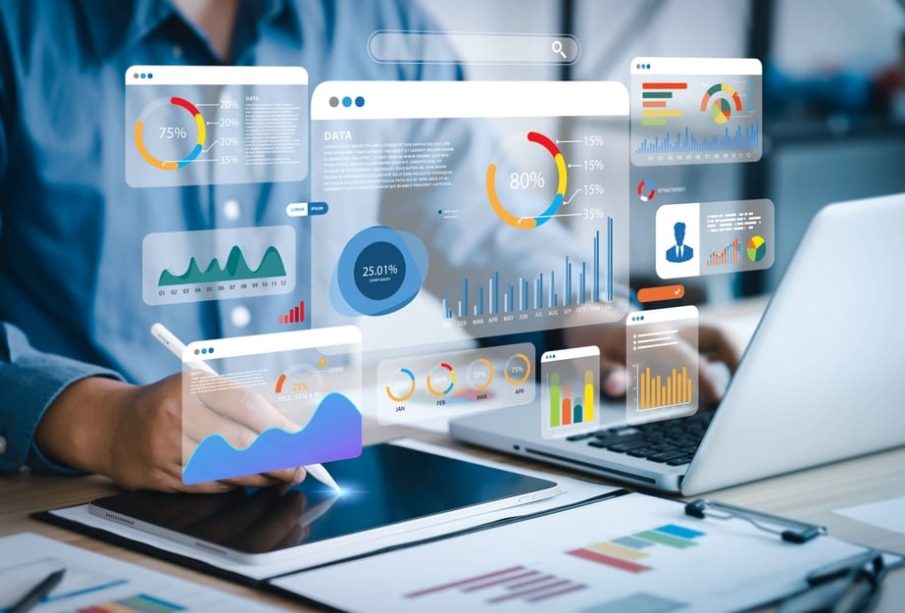
For generations, organizational leadership was defined by executive intuition, subjective experience, and historical precedent. When confronted with complex strategic choices, managers frequently relied on a gut feeling or consensus built around the loudest voice in the room. While this traditional methodology occasionally yielded brilliant breakthroughs, it left enterprises highly vulnerable to cognitive biases, flawed assumptions, and rapid market fluctuations.
The digital revolution has fundamentally dismantled this speculative approach to governance. Driven by the exponential growth of computational architecture, cloud storage infrastructure, and sophisticated algorithms, society has entered the era of data-driven decision-making.
Modern technology allows organizations to capture, synthesize, and analyze billions of data points in real time. This transformation shifts the burden of choices from qualitative estimation to quantitative verification. This comprehensive analysis explores how data-driven technology is transforming decision-making across global industries, the architectural components powering this shift, and the profound strategic advantages realized by an analytical approach to leadership.
The Evolution of the Corporate Intelligence Layer
To appreciate the scale of this technological transformation, one must examine how the processing of information has evolved within corporate frameworks. Data is no longer a passive historical record stored in physical filing cabinets; it has become an active, dynamic asset that shapes live operational strategies.
From Descriptive to Prescriptive Analytics
Historically, data collection was restricted to descriptive analytics, which merely explained what had already occurred in the past, such as a standard end-of-quarter financial report. While useful, this backward-looking data provided little guidance for future actions. Modern data architecture utilizes an evolutionary model that progresses through several distinct layers:
-
Diagnostic analytics: This layer interrogates historical data to understand why a specific event occurred, isolating variables and identifying root causes.
-
Predictive analytics: By feeding clean data sets into machine learning algorithms, systems can identify subtle patterns to forecast what is highly likely to occur under different future scenarios.
-
Prescriptive analytics: The pinnacle of modern data technology, prescriptive platforms analyze various choices, calculate their probabilities of success, and actively recommend the optimal path forward to human operators.
This evolution from observation to prescription transforms data from an administrative byproduct into a primary driver of competitive enterprise strategy.
Sector-Specific Transformations in Choice Architecture
The deployment of analytical platforms has triggered a systemic rewrite of operational practices across virtually every sector of the global economy. By removing human guesswork, industries are achieving unprecedented levels of efficiency and precision.
Precision Medicine and Healthcare Delivery
In the medical sector, data-driven technology is shifting healthcare from generalized treatments to hyper-personalized interventions. By aggregating and analyzing vast data sets comprising patient electronic health records, continuous physiological tracking from wearable medical devices, and complex genomic sequencing, clinicians can make incredibly accurate diagnostic choices.
Predictive algorithms can scan thousands of radiological images in seconds, identifying microscopic anomalies indicative of early-stage oncological developments long before they become visible to the human eye, directly improving long-term patient survival rates.
Supply Chain Optimization and Predictive Logistics
Global logistics networks are highly sensitive to external disruption, including weather anomalies, geopolitical fluctuations, and sudden labor shortages. Data-driven technology transforms supply chain management from a reactive game of telephone into a predictive, automated ecosystem.
Fulfillment platforms continuously ingest real-time data from global positioning sensors, localized inventory scanners, and macroeconomic market trends. Algorithms analyze this data stream to predict exactly when a regional supply bottleneck is about to manifest, automatically rerouting shipments and adjusting manufacturing volumes before a physical shortage can disrupt operations.
Retail Personalization and Demand Forecasting
In consumer-facing markets, the integration of data analytics has completely changed how companies interact with their audience. E-commerce platforms track granular micro-behaviors, such as the exact millisecond a user hovers over a product image, their browsing history, localized weather patterns, and real-time competitor pricing matrices.
This data feeds dynamic pricing engines that adjust retail valuations on the fly to maximize profit margins while simultaneously presenting hyper-personalized product recommendations that dramatically increase average transaction volumes.
The Architecture of Contemporary Data Extraction
The transition to an analytical decision-making model requires a robust, integrated technological stack capable of transforming raw, chaotic data into clean, structured insights.
Big Data Ingestion and Data Lakes
Organizations ingest a staggering volume of information from a wide variety of sources, much of it completely unstructured, such as social media text strings, video files, and raw industrial sensor logs. To capture this information without losing vital detail, enterprises utilize scalable data lakes. These cloud-based repositories store massive volumes of raw data in its native format until it is required for analytical evaluation, bypassing the restrictive silos of traditional databases.
Machine Learning and Neural Networks
Human cognitive capacity is physically incapable of processing billions of data rows to identify meaningful correlations. Modern technology solves this bottleneck by deploying machine learning algorithms and deep neural networks.
These analytical systems are trained to recognize multi-dimensional patterns across disparate datasets that would remain completely invisible to human analysts. For instance, a financial fraud detection algorithm can analyze millions of active global credit card transactions simultaneously, isolating a fraudulent pattern based on subtle deviations in transaction timing and geographic spacing that look completely normal on an individual basis.
The Strategic Advantages of Data-Driven Leadership
Enterprises that successfully integrate an analytical tech stack into their core operational philosophy realize profound competitive advantages over legacy, intuition-dependent competitors.
-
Mitigation of cognitive bias: Human decision-makers are systematically prone to cognitive errors, such as confirmation bias, where they focus exclusively on data that supports their pre-existing beliefs, and recency bias, which overweights the most recent piece of information. Analytical technology presents an objective, unvarnished view of reality, forcing leaders to confront hard metrics rather than comfortable narratives.
-
Hyper-acceleration of operational speed: Real-time data streams combined with automated decision engines allow companies to react to market shifts within milliseconds. This rapid choice execution is highly evident in algorithmic financial trading, where data platforms execute complex buy and sell orders faster than a human could physically read a single line of market text.
-
Democratic information distribution: Implementing centralized data platforms breaks down corporate silos. When data is clean, accessible, and visualized through intuitive executive dashboards, decision-making power is pushed down to frontline managers, allowing for agile, localized problem-solving without the delays associated with bureaucratic corporate hierarchies.
Frequently Asked Questions
What is the exact difference between a data lake and a traditional data warehouse?
A data lake is a vast, flexible storage repository that holds raw, unstructured data in its original form without pre-defining its future purpose, making it ideal for deep machine learning exploration. A data warehouse, by contrast, requires data to be highly processed, cleaned, and structured into rigid tables before it can be saved, serving primarily to run fast, repeatable business intelligence queries and historical reports.
How do organizations protect individual data privacy while utilizing massive data sets?
To balance analytical power with stringent privacy regulations, organizations deploy advanced techniques such as data anonymization, pseudonymization, and differential privacy. These processes systematically strip out personally identifiable information, such as social media numbers, names, and exact addresses, replacing them with randomized identifiers or injecting mathematical noise into the dataset, allowing algorithms to analyze macroscopic trends without compromising individual identity.
What is data provenance, and why is it vital for accurate decision-making?
Data provenance refers to the recorded lifecycle and historical lineage of a piece of data, documenting its exact origin, what transformations it underwent during processing, and how it moved through the organization’s tech stack. Establishing clear data provenance is critical because it allows analysts to audit the reliability of the source, track down errors, and ensure the data remains untampered and clean before it influences high-stakes corporate decisions.
How does algorithmic bias manifest in automated machine learning decision systems?
Algorithmic bias occurs when a machine learning model produces systemically skewed or unfair results because the historical data used to train the algorithm contained past human prejudices or demographic exclusions. For example, if a hiring algorithm is trained exclusively on data from an engineering firm’s historically male workforce, the system will internalize those male demographics as a marker of quality, penalizing exceptional diverse applicants.
What is edge analytics, and how does it speed up local decision processes?
Edge analytics refers to the practice of running data-processing algorithms directly on a localized physical device, such as a smart surveillance camera or an autonomous drone sensor, rather than transmitting the raw data back to a distant cloud server. By processing information locally at the edge of the network, the device eliminates communication latency, allowing for immediate, automated safety decisions within fractions of a second.
Why do some data-driven initiatives fail despite massive technology investments?
Data-driven initiatives typically fail due to structural cultural resistance, poor data literacy among leadership, or low-quality source data. If an organization implements advanced analytical software but corporate executives continue to overrule algorithmic insights in favor of personal intuition or siloed political motivations, the technology becomes an expensive administrative ornament rather than a strategic catalyst.
How can small businesses capitalize on data-driven technology without a massive budget?
Small businesses do not need custom supercomputers to adopt a data-driven model. They can leverage affordable, cloud-based software-as-a-service platforms that feature integrated analytics. Utilizing basic digital tools, such as the built-in audience tracking metrics of mainstream e-commerce hosting platforms, localized search engine analytics, and automated accounting dashboards, allows small business owners to optimize pricing, inventory, and marketing campaigns based on concrete data.